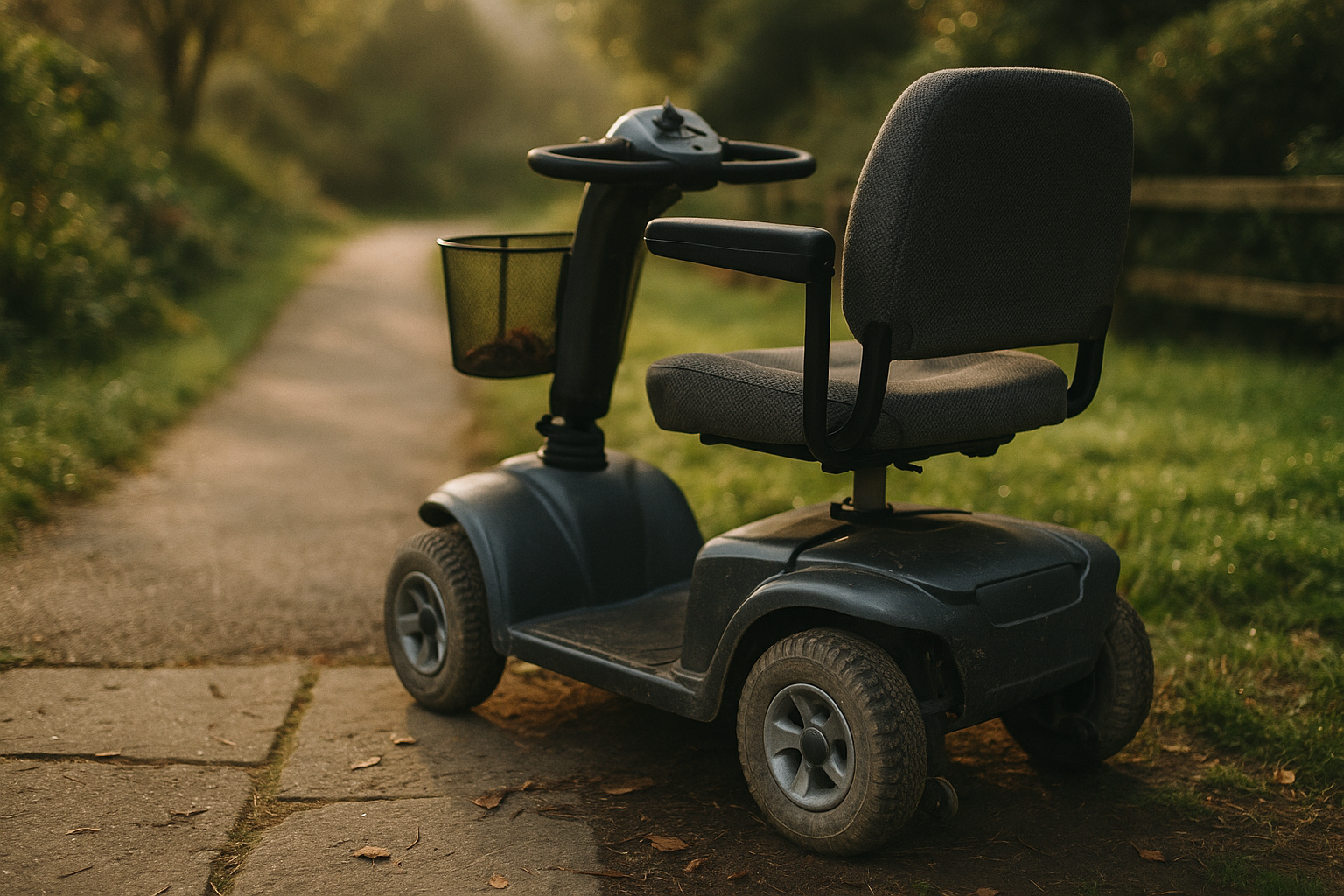
Mobility Scooters
Outline:
– Start With Needs: Lifestyle, Terrain, and Physical Considerations
– Scooter Types and Specifications, Demystified
– Batteries, Charging, and Care
– Safety, Comfort, and Ergonomics You Can Feel
– Budget, Ownership Costs, and the Purchase Checklist (Conclusion)
Start With Needs: Lifestyle, Terrain, and Physical Considerations
Before comparing specs, take a step back and picture a typical week. Do you plan to cruise quiet sidewalks to the café, roll the aisles of a grocery store, or traverse park paths and uneven driveways? The right mobility scooter should fit your daily map like a comfortable pair of walking shoes—supportive where it matters and forgiving where it counts. Start with distance: short neighborhood loops (1–3 miles roundtrip) call for a compact, agile scooter; mixed errands and longer outings (5–10+ miles) often need more range and a steadier ride. Consider terrain next. Smooth indoor floors and tight kitchen corners favor smaller frames with tighter turning radii (often 30–45 inches), while broken pavement and shallow curbs benefit from higher ground clearance (about 2–5 inches) and wider tires.
Home layout is just as important. Typical interior doorways measure 30–36 inches, and hall turns can be tricky. If you’ll be maneuvering indoors, measure narrow passages and note thresholds; a 1–1.5 inch lip at a doorway can feel like a mountain without enough power or correctly sized wheels. Think about transfers too. If you stand to pivot into the seat, a swivel function and armrests that flip up help. If you need to scoot in from the side, look for a low step height and flat foot platform. Don’t forget storage and transport: can the scooter disassemble to fit a car trunk, or do you need a vehicle lift? Heaviest-piece weight varies widely, and what looks light on paper may be challenging in practice.
Use this quick needs checklist to anchor your decision:
– Daily distance: typical roundtrips and occasional long days
– Surfaces: tile, carpet, asphalt, gravel, ramps, or grass
– Space constraints: door widths, elevator size, porch steps
– Transfer style: standing pivot, side transfer, or aided transfer
– Transport: trunk-friendly, foldable, or driveway-stored
– Personal comfort: back support, seat width, legroom, and hand strength
Finally, be honest about strength, balance, and stamina. Hand dexterity affects throttle styles and control levers; shoulder comfort guides tiller reach; and posture determines seat height and backrest needs. A scooter that matches your real-world rhythms reduces fatigue, increases safety, and restores the kind of everyday spontaneity that makes errands feel like small adventures again.
Scooter Types and Specifications, Demystified
Understanding categories helps you filter options fast. Three-wheel models trade some fore-aft stability for nimble turning, which is great for indoor corners and narrow store aisles; four-wheel models typically feel steadier outdoors and on uneven surfaces. Travel or folding scooters emphasize portability: some break down into several pieces, and the heaviest section may range from roughly 25–60 pounds. Mid-size units add stability, suspension features, and larger batteries, with total weights often in the 90–150 pound range. Heavy-duty or all-terrain designs increase weight capacity (commonly 350–500 pounds) and ground clearance, and they prioritize power over trunk-friendliness.
Key specs to decode:
– Range: commonly 10–40 miles per charge, depending on battery size, rider weight, terrain, and temperature. Real-world range is often 60–80% of the lab rating.
– Speed: typically 4–8 mph. For crowded sidewalks and indoor spaces, lower top speeds are plenty; outdoor errands may feel smoother with a mid-range setting.
– Turning radius: about 30–60 inches. Smaller is handier indoors; larger can be tolerable if you mostly ride outdoors.
– Ground clearance: about 2–5 inches. Higher clearance helps with driveway lips and uneven paths but can raise the step height.
– Weight capacity: many models support 250–500 pounds. Choose with margin for clothing, bags, and accessories.
– Tires: solid or foam-filled resist flats; pneumatic (air-filled) offer a cushier ride and better grip on varied surfaces.
– Suspension: front, rear, or both can reduce vibration and fatigue on rougher pavement.
Comfort touches matter more than they sound on paper. Seat width and depth determine pressure distribution, while backrest height influences posture on longer rides. A swivel seat simplifies café-table parking and dismounts. Adjustable armrests help with transfers and relieve shoulder tension; adjustable tillers reduce wrist strain and let you sit upright with elbows bent roughly 90–120 degrees. Consider the cockpit: a delta-style tiller is friendly for reduced grip strength, and clear battery indicators reduce range anxiety.
For daily convenience, look for basket placement that doesn’t block knees, a floorboard deep enough for relaxed foot angles, and lighting for dusk rides. If you expect frequent sidewalk cracks or speed bumps, prioritize stable wheelbase, moderate speed, and tires with enough diameter to roll smoothly. Specs are your map; choose the route that fits your streets.
Batteries, Charging, and Care
The battery is the quiet workhorse of any mobility scooter, and understanding a few fundamentals will save headaches later. Two chemistries are common. Sealed lead-acid (SLA) batteries are widely used and generally more affordable up front; they are heavier, and typical cycle life ranges roughly 200–300 full cycles when cared for properly. Lithium-based packs are lighter for the same capacity, often charge faster, and can reach 500–1,000 cycles under good conditions, though they usually cost more. In both cases, temperature, charging habits, and load all influence longevity and real-world range.
Charging time depends on charger output and battery capacity; overnight charging is common, with many setups taking around 4–10 hours. A charger rated at 2 amps will be gentler but slower than a 5-amp unit. For day-to-day care, shallow discharges are kinder than deep ones: try to recharge before the battery drops below roughly 20–30%. Cold weather can trim range by 10–25%, while very hot conditions shorten battery life over time. If your scooter lives in a garage, aim for a cool, dry spot away from direct sun; if storing long-term, leave batteries around half to three-quarters charged and top up monthly.
Maintenance is simple but consistent:
– Charge after use rather than waiting for full depletion
– Keep terminals clean and dry; inspect for corrosion or swelling
– Use only the charger type recommended for the battery chemistry
– Avoid leaving the pack at 0% or on permanent trickle for weeks
– In winter, let cold batteries warm to room temperature before charging
– Plan proactively for replacement when range meaningfully declines
Range claims deserve a reality filter. If a scooter is rated for 20 miles, plan your day around 12–16 miles unless conditions are ideal. Rider weight, frequent starts and stops, hills, and headwinds all nibble at capacity. Pneumatic tires slightly lower rolling resistance at the right pressure; underinflation wastes energy and rides harshly. The battery indicator is your fuel gauge—glance at it before turning onto a long path or committing to multi-errand loops. Treat the battery like a trusty thermos: keep it at a comfortable temperature, refill it before it runs dry, and it will return the favor with dependable miles.
Safety, Comfort, and Ergonomics You Can Feel
Safety begins at the controls. Most scooters use electromagnetic brakes that automatically engage when you release the throttle, holding position on gentle slopes and providing smooth deceleration. A manual parking brake or drive/neutral lever adds backup security. Look for lighting that fits your routes: a forward headlight for dim evenings, rear reflectors or lights for visibility, and side reflectors for crosswalks. A simple horn is useful near building entrances where pedestrians may step out unexpectedly. Anti-tip wheels at the rear can add confidence on inclines and curb cuts—helpful if your neighborhood has frequent driveway transitions.
Comfort is not a luxury; it’s an energy saver. Aim for a relaxed posture with shoulders down and elbows roughly 90–120 degrees, wrists neutral, and back supported. Adjustable tillers let you bring the controls close without hunching. Check seat height: knees near a right angle reduce hip strain, and sufficient footboard depth keeps ankles from pinching. Armrests that flip up simplify transfers and let you pull in close to tables. Seat padding density matters too; a firm cushion distributes weight more evenly on longer rides than an ultra-soft pad that bottoms out.
Try a realistic test ride. Navigate a tight U-turn, a gentle ramp, and a short stretch of rough pavement. Listen for rattles and feel for vibration through the seat and tiller. If your driveway slope feels intimidating, ask for the scooter’s climbing and curb ratings; many manage curb cuts around 1.5–2 inches and are rated for slopes of about 6–10 degrees. In wet conditions, treaded tires and cautious speed make a big difference. Some scooters carry splash protection and moderate ingress ratings, but puddles and heavy rain are still reasons to slow down or pause.
Accessibility extends beyond the scooter. If you’ll transport it in a vehicle, practice loading and unloading with the heaviest piece weight in mind, and consider a lightweight ramp if lifting is difficult. At home, a small threshold ramp can make a stubborn doorway effortless. For accessories, consider a cane holder, a weather-resistant bag, or a cup holder that doesn’t crowd your knees. Above all, customize thoughtfully: small ergonomic gains stack up to reduce fatigue, sharpen control, and make each trip feel calm and capable.
Budget, Ownership Costs, and the Purchase Checklist (Conclusion)
Buying a mobility scooter is more than a one-time price tag; think in terms of total cost of ownership. Batteries are consumables—expect to replace them periodically depending on mileage, charging habits, and storage temperatures. Tires wear, especially if you ride frequently on abrasive pavement; solid tires avoid flats but may transmit more vibration, while pneumatic tires need pressure checks and occasional tube or tire replacements. Routine maintenance is usually light: cleaning, occasional fastener checks, and keeping chargers and connectors in good shape. Energy costs per mile are typically modest, and simple habits—proper tire inflation, cautious acceleration, good route planning—extend both battery life and hardware lifespan.
Funding and protections vary by region. Some health systems, mobility programs, or insurers may subsidize a scooter when medical necessity is documented; other times, flexible payment plans or pre-owned units make sense. Warranties often separate coverage for the frame, electronics, and battery; read the fine print to understand labor coverage and shipping logistics. Local dealers can provide fitting, test rides, and service access, while online vendors may offer broader selection and delivery convenience. The right choice depends on how much you value hands-on setup, tuning, and long-term service relationships.
Use this step-by-step checklist to buy with confidence:
– Confirm your primary use: indoor agility, outdoor stability, or a mix
– Measure key spaces: doorways, elevator depth, car trunk opening
– Match specs: weight capacity, turning radius, ground clearance, and range
– Choose tire type and suspension to suit surfaces you’ll ride most
– Evaluate portability: heaviest piece you can lift, or plan for a ramp/lift
– Test ergonomics: seat size, armrest position, tiller reach, and visibility
– Validate support: warranty terms, local service options, and spare parts availability
– Plan ongoing costs: batteries, tires, and occasional tune-ups
As you close in on a decision, imagine a favorite mini trip—a morning loop to the park, a quick roll to the market, a visit with friends across town. The right scooter won’t shout for attention; it will simply make that small journey smooth, steady, and enjoyable. With a clear view of needs, plain-language specs, and a realistic budget, you’re set to choose a dependable companion that supports mobility today and evolves with tomorrow’s plans.